Why 25 metres
The Queensland page gives the rule and its reason in one sentence:
“Relocators must release possums within 25 metres of the point of capture to ensure that an animal is not released into another possum’s home range (possums are less likely to survive if they are released into a new area where they do not have access to a den or must compete with a neighbouring possum for den space).”
Behind it is a shortage of homes. Dens limit how many possums an area can hold, the page explains, and with few old trees with hollow branches left in the suburbs, brushtail possums have moved into ceilings instead. The dens that exist are all taken by adults, and a possum with no den will not survive. So when one possum is taken away, another soon moves into its den.
That is why the page says plainly that having a possum removed is “not a ‘quick fix’”: a den that is left open is simply taken up again.
Getting a possum out of the roof
The page sets out the work roughly in this order. Each row is a stage, not a time.
- 01
Find the way inA brushtail that can get its head into a space can probably squeeze the rest of its body through, and older homes often have roof openings that big. The page’s test uses newspaper: scrunch a few sheets loosely and stuff them into every gap. If a possum is using the gap, it pushes the paper out when it emerges at dusk. A possum may use several entry points, so the test may need repeating, and branches hanging over the roof are trimmed back at the same time.
- 02
Let it out, not back inAn opening is sealed only once the possum is not inside. To save doing the repair at night, the page describes a one-way exit, put up together with a nest box nearby. One version is a heavy-duty garbage bag with its bottom cut out, taped over the hole, so the possum can push out but not back in. Another is wire mesh fixed along one side only, which swings open as the possum leaves and springs shut behind it, held open at first with crumpled newspaper.
- 03
Seal itOnce you are certain the possum is out, the other side of the mesh is fixed down. A strong-smelling substance such as disinfectant, or a spray of quassia chip solution, around the sealed entrance discourages it from trying again.
- 04
Give it a den“Brushtail possums will only survive if they have a den.” Lacking one, a brushtail faces daytime attacks from crows and other birds, and fights with other possums when it tries to move into a den that is already taken. The page links a plan for building a possum nest box.
- 05
If a relocator does itRelocators usually block off the access points, then set a cage trap in the ceiling and release the possum outside. The page suggests asking the relocator to seal every entry point to the roof space and to put up a nest box while they are there.
Brushtail and ringtail
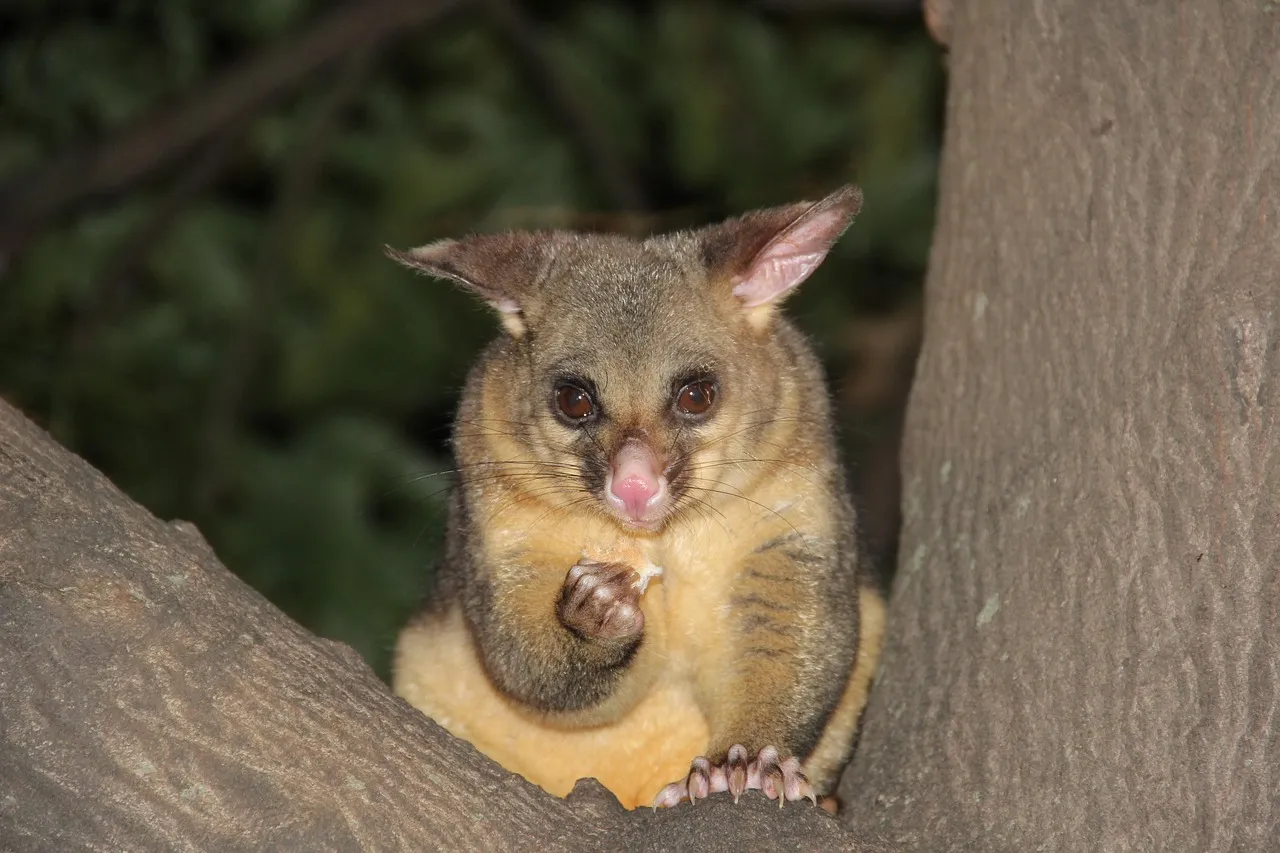
The two possums most people meet are the common brushtail and the common ringtail. Possums are usually wary of people and do little harm, the page says, but they eat fruit and flowers from gardens, and the brushtail is the one that moves into the ceiling.
Ringtails live in the trees, in a ball of sticks called a drey, woven into the branches. A ringtail builds several dreys in its home range and moves to another if one is destroyed, but a drey destroyed in the daytime, with the possum in it, leaves the possum open to crows and noisy miners if it cannot find shelter. Possums usually live alone; two together are usually a mother and joey, and ringtails often have twins.
Fruit trees and the vegetable patch
The page offers a few options for keeping possums off the fruit:
- collars of galvanised metal sheeting around trunks or branches, wide enough that a possum cannot jump over them, with the tree pruned back from neighbouring trees and fence lines;
- fruit enclosed one by one in shade cloth bags, or under plastic pots split up one side and half the base so they sit over the fruit like bells;
- small trees enclosed in frames covered with light shade cloth, never netting an animal can get tangled in;
- a spray made from quassia chips, which deters brushtail possums;
- in extreme cases, chicken wire around a vegetable garden.
Feeding possums is a different matter. The page calls it unnecessary, because it can draw possums to one food source, causing stress and injuries as they compete.
With the holes blocked and perhaps a nest box in a backyard tree, the page’s hope is that a brushtail becomes “a harmless, welcome sight”.